PET Acoustic Panels for Modern Interiors
PET acoustic panels are widely used in commercial interiors where designers and specifiers need practical sound absorption combined with flexibility in colour, format and layout. Offices, education spaces, hospitality venues and public buildings often include hard surfaces that reflect sound and increase reverberation. PET acoustic systems help control these conditions while still supporting contemporary interior design.
Because PET acoustic products can be manufactured as wall panels, ceiling baffles, ceiling clouds, screens and decorative features, they are well suited to a broad range of acoustic applications. This flexibility has made them a common choice for workplaces and commercial environments where both acoustic comfort and appearance matter.
PET Acoustic Panels – Complete Guide
PET acoustic panels are manufactured from compressed polyester fibre and are designed to absorb sound energy within a room. Their role is to reduce sound reflections, control reverberation and support better speech clarity in occupied spaces.
Unlike decorative hard finishes such as glass, plasterboard or solid timber, PET acoustic products are sound absorbing materials. This makes them particularly useful in interiors where echo, background noise and speech reflection affect comfort and communication.
How PET Acoustic Panels Work
PET acoustic panels absorb sound by allowing sound waves to enter the porous structure of the material. As sound energy moves into the panel, part of that energy is dissipated within the fibre structure rather than being reflected back into the room.
This process helps reduce reverberation and improves the overall acoustic quality of the space. In practical terms, it can make rooms feel calmer, reduce the harshness of reflected speech and improve listening conditions in meeting, teaching and working environments.
The acoustic performance of PET panels is influenced by factors such as panel thickness, mounting method, air gap and the total amount of acoustic coverage within the room.
Types of PET Acoustic Systems
PET acoustic materials can be adapted into a number of product formats depending on the needs of the project.
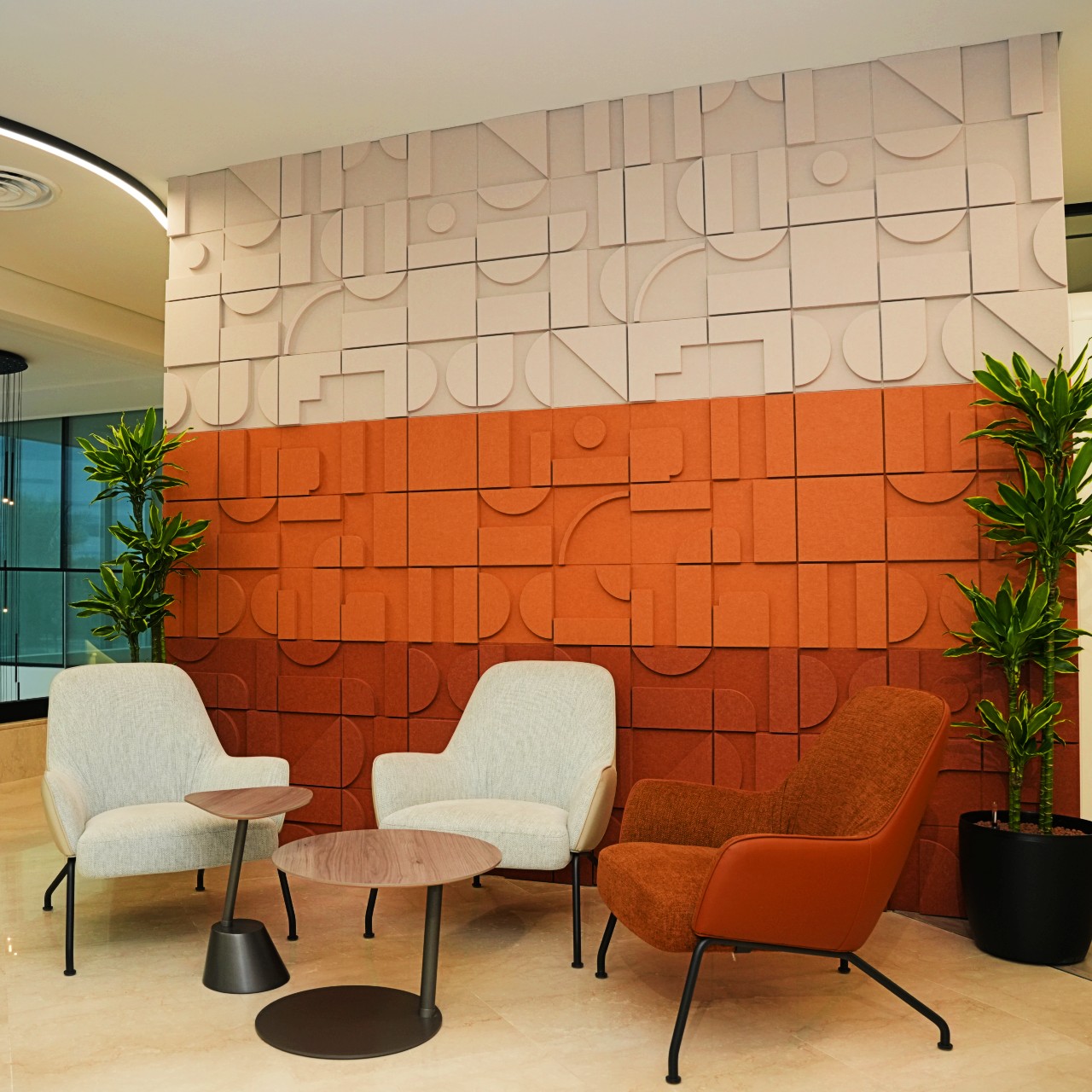
PET acoustic wall panels are used to treat reflective wall surfaces in meeting rooms, offices, classrooms and shared spaces.
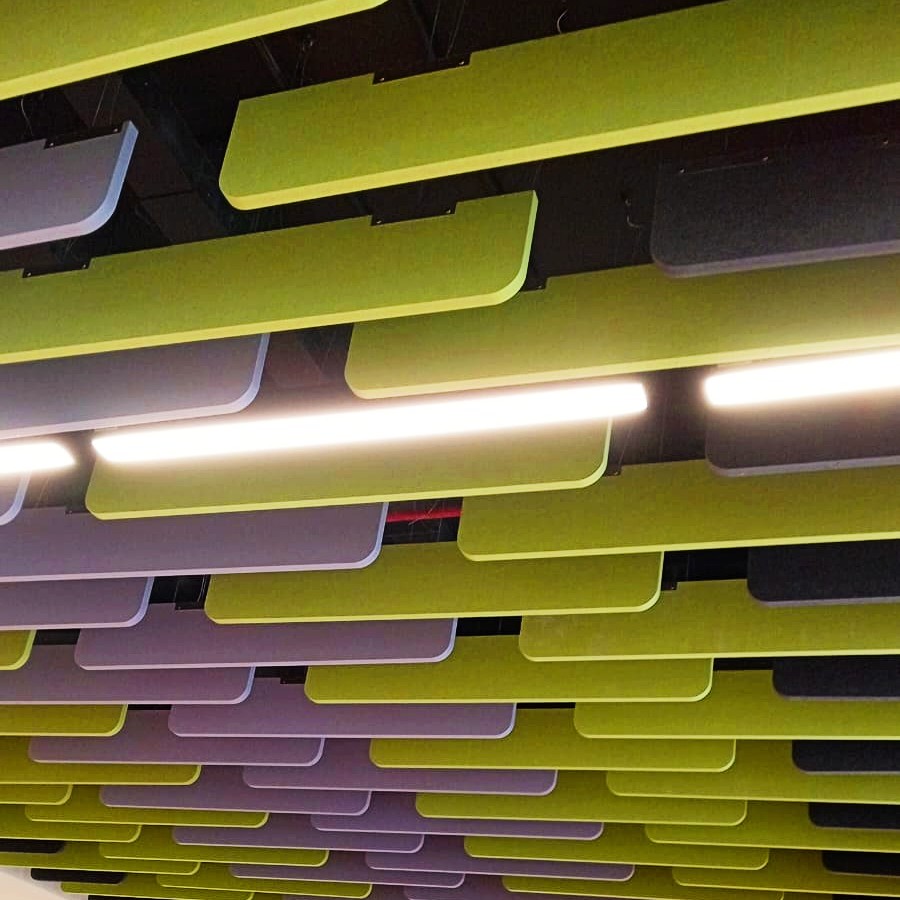
PET acoustic baffles are suspended vertically from the ceiling and are particularly effective in open-plan spaces and interiors with exposed services.
PET ceiling clouds provide overhead sound absorption while also creating visual interest within a room.
Acoustic screens and dividers can be used around workstations and shared spaces to provide local acoustic treatment and visual separation.
These formats allow designers to apply acoustic treatment where it is needed most while supporting the overall fitout design.
Where PET Acoustic Panels Are Commonly Used
PET acoustic systems are used across a wide range of commercial and public interiors. Typical applications include offices, boardrooms, classrooms, libraries, hospitality venues, community buildings and open-plan collaborative areas.
In these environments, acoustic treatment is often needed to improve speech intelligibility, reduce echo and create a more comfortable interior for occupants. PET systems are especially useful where large wall or ceiling areas need treatment without introducing bulky construction.
PET Wall Panels, Baffles and Ceiling Clouds
Each PET acoustic format serves a slightly different purpose. Wall panels are effective in enclosed rooms and spaces where strong lateral reflections need to be reduced. Baffles work well in larger open interiors and high-ceiling spaces because they introduce exposed sound-absorbing surfaces without closing in the ceiling.
Ceiling clouds can provide acoustic control over key occupied zones such as meeting tables, collaboration areas or reception spaces. In many projects, the best result comes from combining several treatment types rather than relying on a single product format.
Design Flexibility and Colour Options
One of the advantages of PET acoustic systems is their visual flexibility. They can be manufactured in a wide range of colours, shapes and surface treatments, making them suitable for contemporary commercial interiors where acoustic materials are expected to contribute to the design rather than disappear into the background.
This makes PET panels particularly useful where acoustic treatment also needs to support branding, zoning or interior identity.
Environmental Considerations
PET acoustic products are often selected for projects where environmental credentials and recycled content are part of the specification criteria. This makes them attractive in commercial interiors where acoustic performance, visual design and sustainability need to be considered together.
For specifiers, PET systems can provide a practical balance between performance and environmental responsibility.
Choosing the Right PET Acoustic Solution
The right PET acoustic system depends on the room type, ceiling height, level of background noise and the way the space is used. A meeting room may benefit from wall panels, while an open-plan office may require ceiling baffles or clouds. Shared work areas may benefit from screens or a mix of several acoustic treatments.
By matching the product type to the actual acoustic conditions of the space, designers can achieve a more effective and balanced result.
Common PET Acoustic System Types
| System Type | Typical Use | Product Link |
|---|---|---|
| PET Wall Panels | Meeting rooms, offices, classrooms | Acoustiscreen Wall Panels |
| PET Acoustic Baffles | Open ceilings, offices, call centres | DecraBaffle |
| PET Ceiling Clouds | Reception areas, meeting zones | DecraCloud Ceiling Panels |
| PET Acoustic Screens | Workstations, partitions, spatial zoning | View Decrasound Products |
Frequently Asked Questions
What are PET acoustic panels made from?
PET acoustic panels are made from compressed polyester fibre and are designed to absorb sound within interior spaces.
Do PET acoustic panels absorb sound?
Yes. PET acoustic panels are sound absorbing materials that help reduce reverberation and control reflected noise within a room.
Where are PET acoustic panels commonly used?
PET acoustic panels are commonly used in offices, classrooms, meeting rooms, hospitality venues and public buildings.
Can PET acoustic panels be used on ceilings?
Yes. PET acoustic products are frequently used as ceiling baffles, ceiling clouds and other suspended acoustic features.
What is the difference between PET wall panels and acoustic baffles?
PET wall panels are installed on vertical wall surfaces, while acoustic baffles are suspended vertically from the ceiling to treat larger open spaces.