Acoustic Baffles for Open Ceiling Offices
Open ceiling office designs are now common in modern workplaces. They create a clean, industrial look; however, they also introduce acoustic challenges. Exposed services, higher ceilings, and open layouts allow sound to travel more freely. As a result, noise levels increase and speech clarity drops.
Why Open Ceilings Create Noise Issues
In traditional offices, ceiling tiles absorb a large portion of sound. In contrast, open ceiling designs remove this layer of absorption. Because of this, hard surfaces reflect sound back into the space.
Consequently, reverberation times increase and background noise becomes more noticeable.
How Acoustic Baffles Control Sound
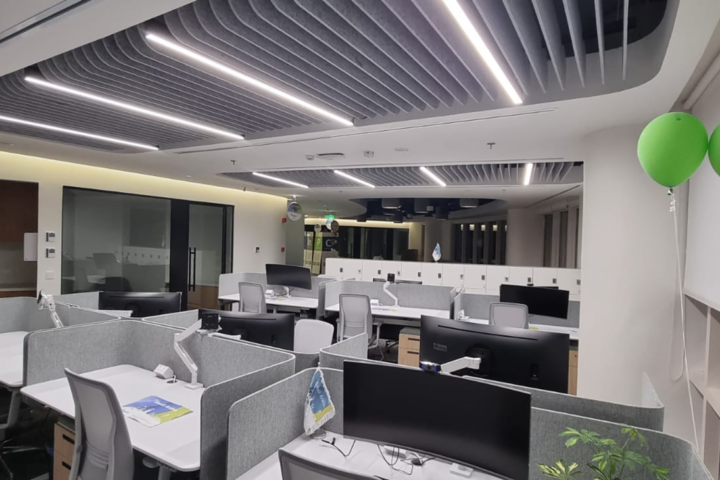
Acoustic baffles introduce vertical absorption into the ceiling space. By suspending panels from above, they absorb sound from multiple sides. As a result, they perform well in open environments.
At the same time, this approach maintains the open ceiling design. Therefore, you can control sound without closing in the ceiling or changing the architectural intent.
Designed for Open Ceiling Layouts
Decrabaffle systems suit open ceiling offices where traditional ceiling systems are not practical. For example, installers can arrange them in linear runs or custom layouts.
Because of this flexibility, designers can achieve both acoustic performance and visual consistency.
Flexibility for Designers and Fitout Teams
Acoustic baffles can be spaced, aligned and configured to suit lighting, services and ceiling height. As a result, architects and fit-out teams gain greater control during both design and installation.
In addition, this flexibility helps coordinate with other ceiling elements without compromise.
Where Acoustic Baffles Work Best
Open-plan offices, collaboration zones, breakout areas and commercial interiors all benefit from ceiling baffle systems. This is especially true when exposed ceilings form part of the design.
Ultimately, the approach is simple: introduce absorption where it is missing. Acoustic baffles achieve this effectively while maintaining the overall look of the space.
Typical Applications for Acoustic Baffles
| Application | Acoustic Benefit |
|---|---|
| Open Plan Offices | Reduces overall noise levels and improves workplace comfort |
| Exposed Ceiling Workspaces | Adds absorption where ceiling tiles are not used |
| Collaboration Zones | Improves speech clarity in shared working areas |
| Breakout Areas | Controls noise build-up in informal meeting spaces |
| Commercial Fitouts | Integrates with lighting and services without redesigning the ceiling |
Frequently Asked Questions
Why are open ceiling offices noisy?
They lack ceiling absorption, allowing sound to reflect and build up.
How do acoustic baffles work?
They absorb sound from multiple sides, reducing reverberation.
Are baffles better than ceiling tiles?
They are ideal where ceiling tiles are not used, especially in exposed ceilings.
Can baffles be customised?
Yes, they can be arranged and spaced to suit the design.
Who typically uses acoustic baffles?
Architects, designers, and fitout companies working on commercial interiors.
Planning an Open Ceiling Office?
Acoustic baffles provide a practical way to control sound without changing the ceiling design.
Speak with our team about Decrabaffle solutions for your next project.